Visualizing Interfacial Phenomena

Research Focuses

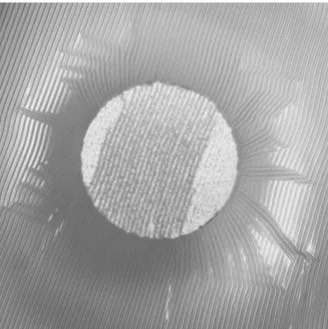
Surface and interfacial properties in soft materials dictate the interactions between polymers and their environment. The PIM Research Group utilizes optical microscopy and fluorescence techniques coupled with in situ mechanical testing methods to observe and investigate the adhesion, friction, and wetting behavior of elastomeric and glassy polymers.
 
FRET cellulose epoxy.png
Silk MP.jpg

Illuminating Contact Formation

Contact Formation
 

Fiber Reinforced Composite Interfaces

Composite Interfaces
 

Thin Film Mechanical Properties

Film Mechanics


Wrinkle Res Stress.jpg

Contact Formation

Advanced fluorescence techniques, specifically Förster Resonance Energy Transfer (FRET), are used to observe the initial contact or wetting between a compliant interface and a rough surface.

Back to Research Overview

Fiber Reinforced Composite Interfaces

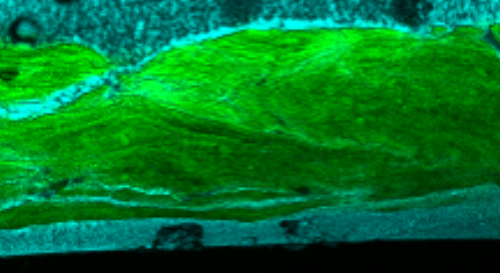
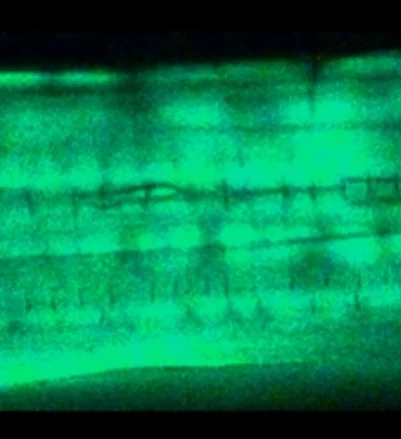
Interfaces in composites determine the overall mechanical strength of the finished part. By installing molecular probes at the interface between matrix and reinforcement, we are able to quantitatively monitor interfacial failure.

Back to Research Overview
Tensile.jpg

Cracks in Epoxy Film TEM.jpg

Mechanical Properties of Thin Films

Utilizing plate buckling mechanics, we investigate the mechanical properties of various thin polymer films, ranging from model glassy homopolymers to assembies of cellulose nanocrystals.

Back to Research Overview